One answer to a simple question: who owes what?
Recurring fees. Session billing. Prepaid packages. Makeup credits. Manual payments. Novano brings them into one fee system so your team can see what was owed, what was paid and what still needs attention.
Every new account gets 30 days free. A card is needed to start; cancel any time before day 30.
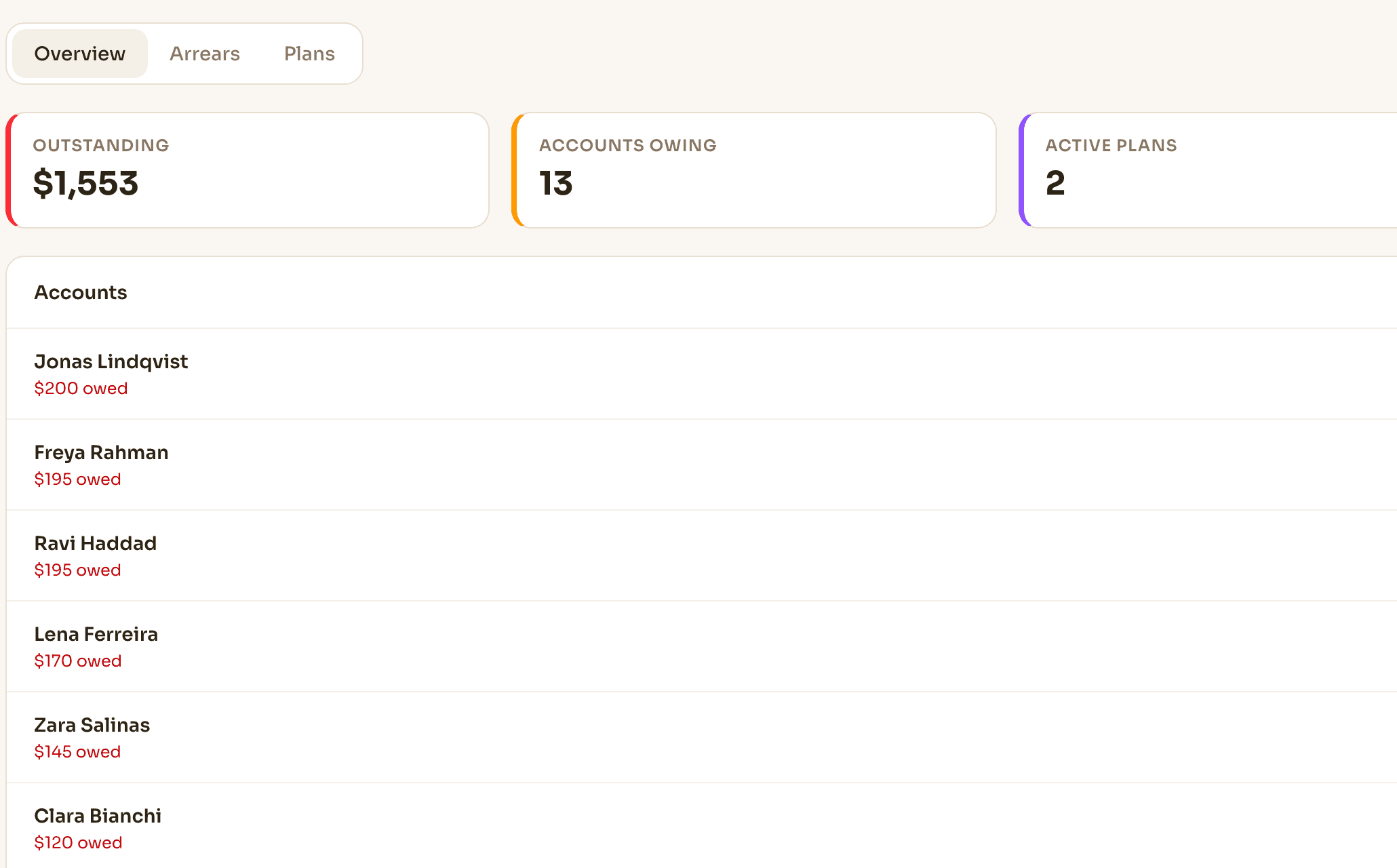
Bill the way your center actually works.
Most centers charge more than one way at once. Whichever way a given student is billed, it resolves into a single ledger — so 'who owes what' never depends on which system you check.
into
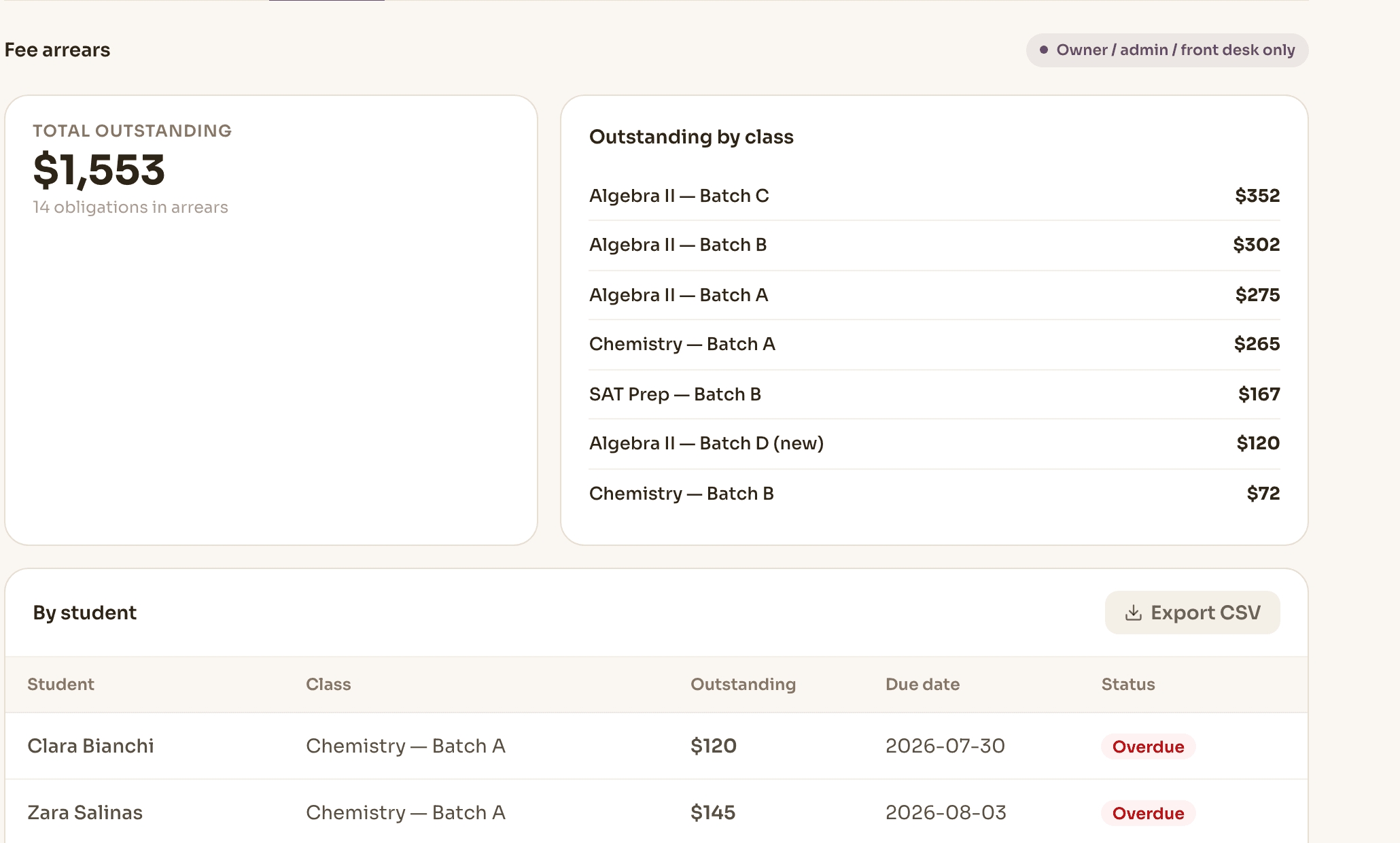
Know what's due before someone has to remember.
Due soon, overdue, outstanding — the fee register keeps arrears in view so chasing fees stops depending on anyone's memory or a side spreadsheet.
Two things chase fees so nobody has to remember. Novano sends the routine reminder itself — every three days to families with a balance, and you can turn that off. And when a family needs more than the standard note, Nova drafts one from that family's own history — you read it, change what you want, and send.
Nova drafts; a person reviews and sends. The routine reminder goes out on schedule — the conversation that needs a human stays with one.
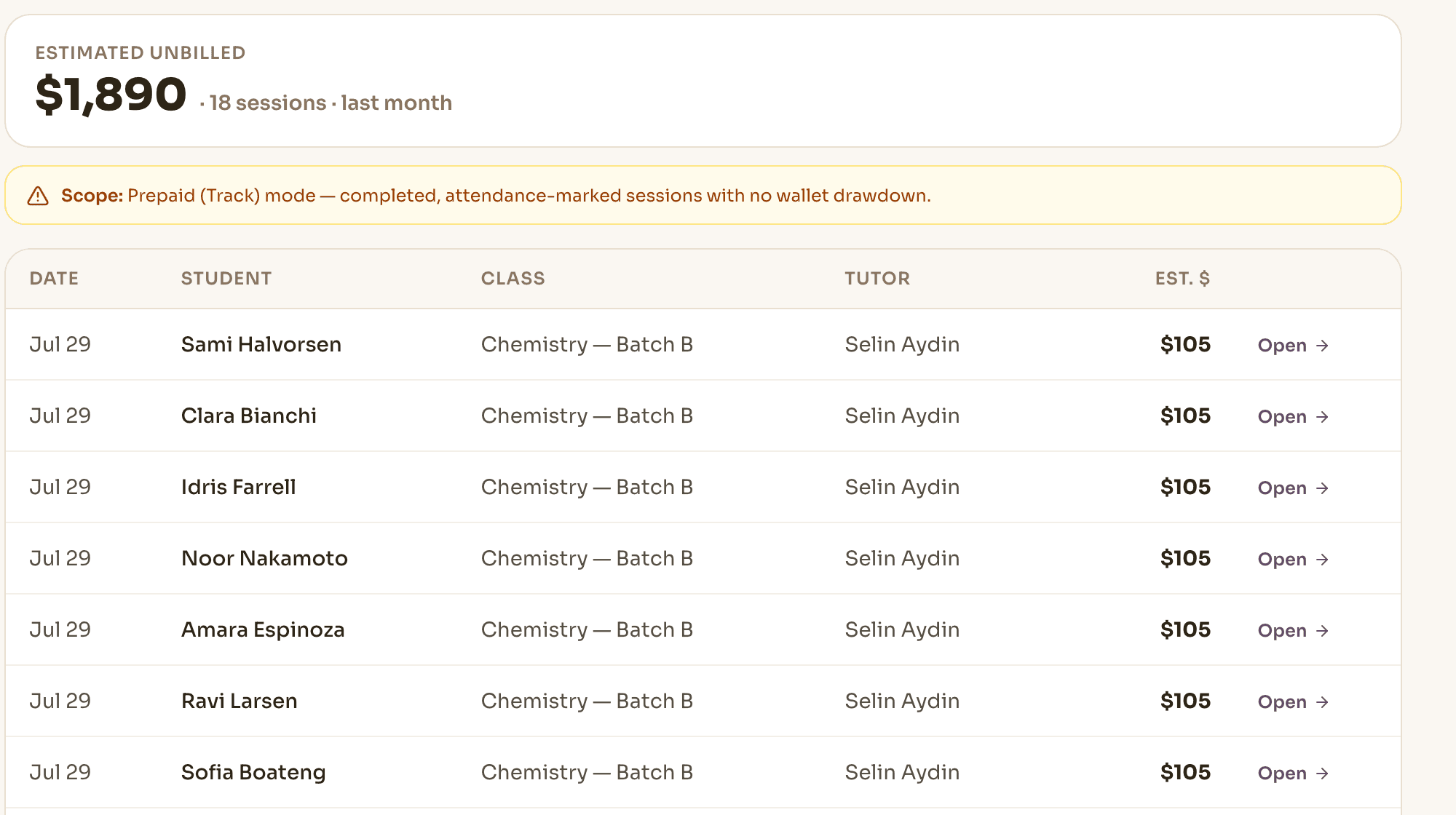
Which sessions did you teach but never bill?
Novano compares what was delivered with what reached the fee ledger, so revenue gaps become something you can work through — a list of specific sessions — rather than something you discover after the fact.
This only works because attendance and billing are the same system. The delivered side of the comparison is exactly the marked sessions from your roster.
- Delivered sessionsfrom the roster
- Checked against the ledger
- 18 unbilled · $1,890an estimate, last month
A worklist you act on, not a surprise at month end — every row links back to the session it came from.
Makeups without the spreadsheet.
A late cancellation is one event with a billing consequence. Your policy decides whether it's chargeable and whether it earns a makeup — and the credit lands against a future session in the same system, so it can't go missing between attendance and fees.
- Cancellation
- Your policy
- Makeup credit
- Future session
- Credit applied
The same event the attendance page describes — seen from the billing side.
Know what your center earned — and what it owes tutors.
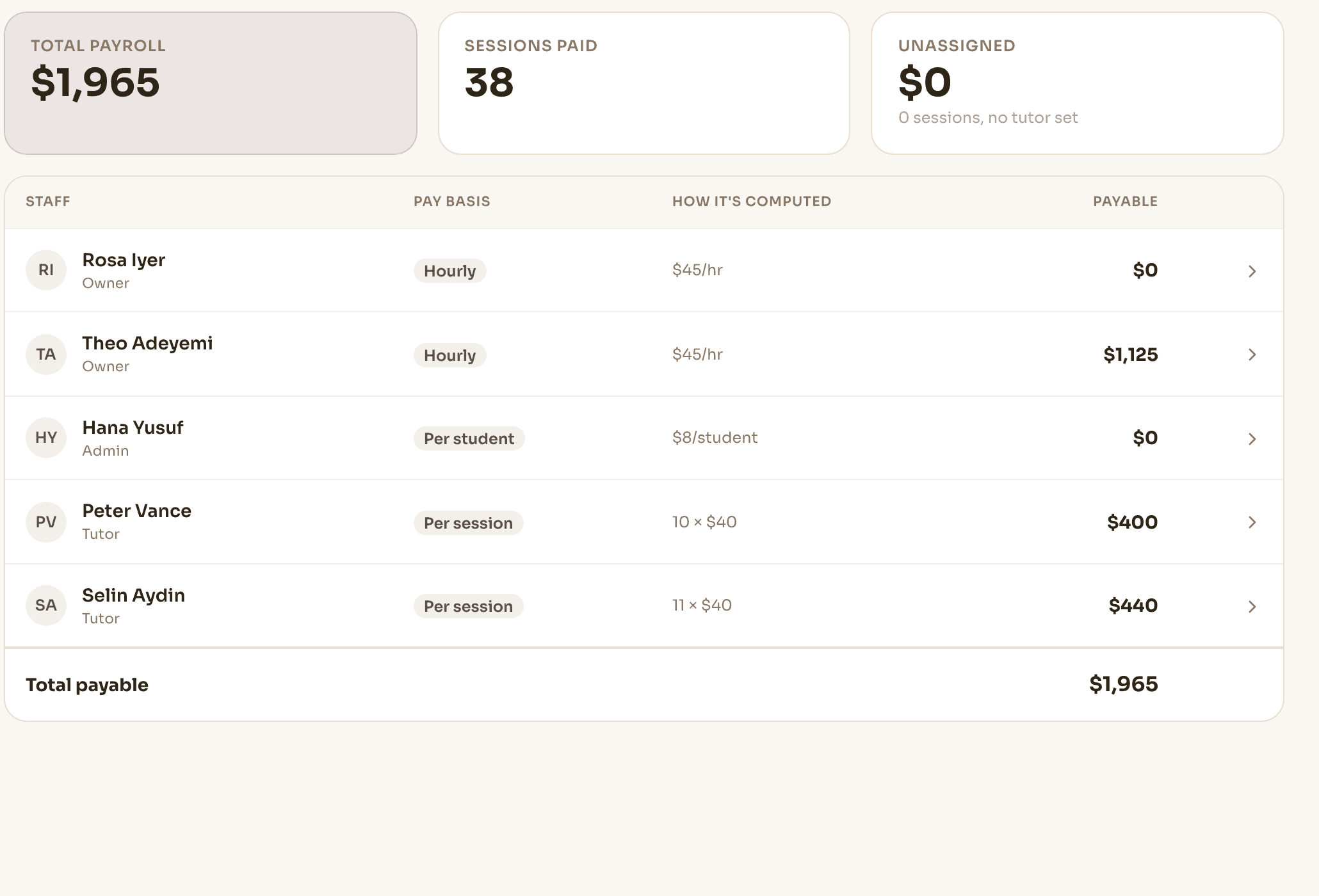
Attendance and fees feed one billing record, and that record answers two questions at once: what the center earned, and what it owes the team that taught. Two views of the same data, not two spreadsheets to reconcile.
Novano calculates and exports tutor pay. Moving the money stays with your existing payroll process.
answers
Good to know
Can we mix recurring fees and prepaid packages?
Yes. Fee plans, installments, packages and session billing all resolve into one canonical ledger, so 'who owes what' has a single answer however a given student is charged.
What happens to a late cancellation?
Your cancellation rules decide whether it's chargeable and whether it earns a makeup credit. Credits apply against future sessions from the same system that holds attendance — the same event this page and the attendance page are both describing.
Does Novano send payment reminders?
Yes — automatically, once your center is collecting fees, every three days to families with a balance. You can switch that off in settings, and each parent or guardian can opt out of email independently. Separately, Nova can draft a reminder for one specific family from their own history, which a person reads and sends. Nova itself never sends.
Does Novano pay our tutors?
No. Novano calculates tutor pay from attendance and revenue already recorded, and exports it. Moving the money stays with your existing payroll process.
Bring your fee structure.
We'll set up the way your center charges and show you who owes what — and which sessions your current process would have missed.
Every new account gets 30 days free. A card is needed to start; cancel any time before day 30.